♬
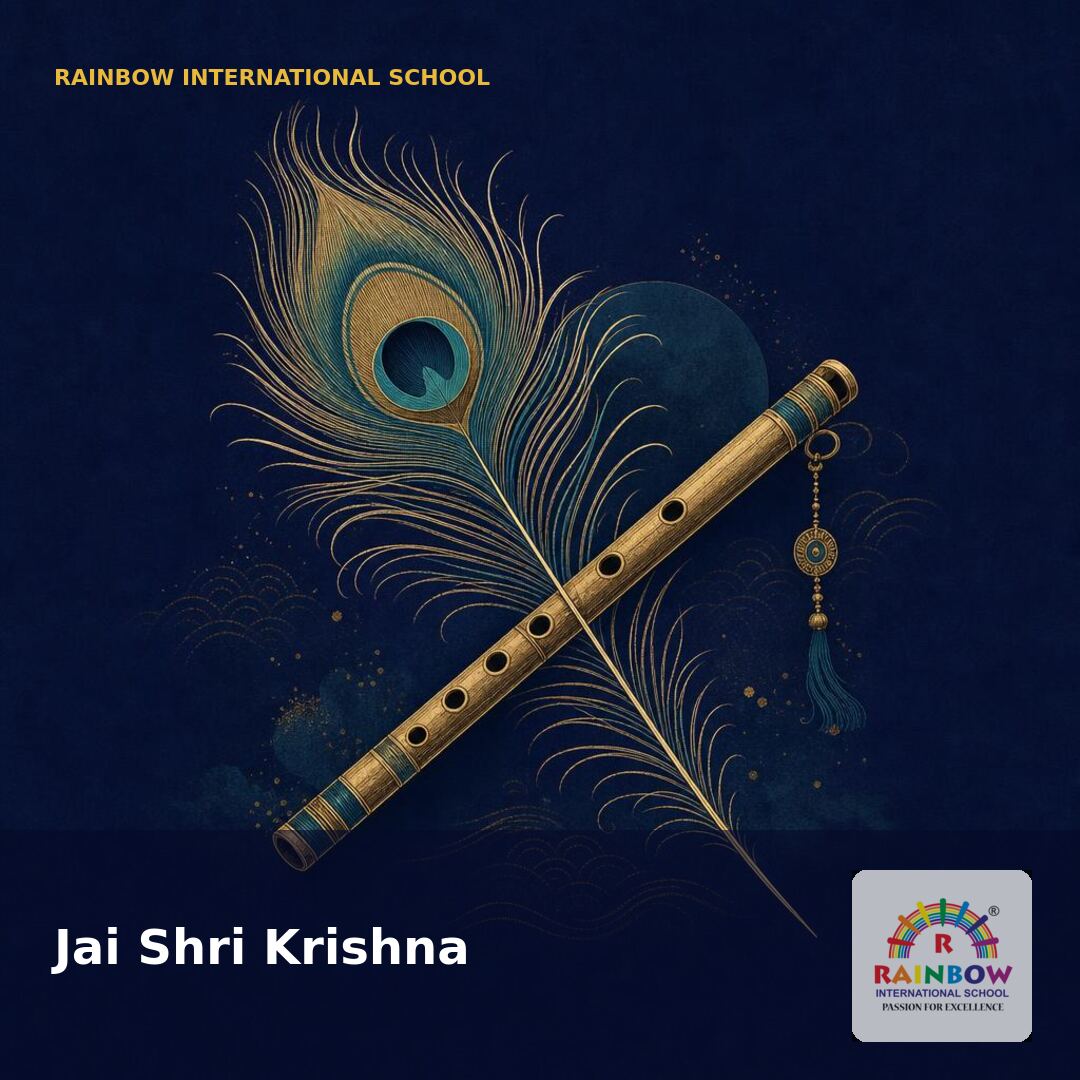
Bansuri (Flute)
Represents Krishna's ability to draw hearts through art and music; a symbol of surrender and harmony
Celebrating Lord Krishna's Timeless Legacy | September 4–5, 2026 | A Complete Resource for Students, Parents & Teachers
A complete student resource
Every year, millions of families across India and around the world pause to celebrate the birth of Lord Krishna — one of the most beloved and widely worshipped forms of the divine in Hindu tradition. This guide brings together history, reflection, ready-to-use school resources, family traditions, and a little room to play and discover.
01 · The dates and the meaning
In 2026, Krishna Janmashtami falls on Friday, September 4 (Smarta tradition, followed by most households and schools) and Saturday, September 5 (Vaishnava/ISKCON tradition, followed by temples and monastic communities). Maharashtra's much-loved Dahi Handi celebrations take place on Saturday, September 5, 2026.
According to the Panchang, the Ashtami Tithi begins at 2:25 AM on September 4 and continues until 12:13 AM on September 5, with the auspicious Nishita Kaal Puja Muhurat — the moment traditionally believed to mark Krishna's midnight birth — falling between 11:55 PM on September 4 and 12:42 AM on September 5 (a 47-minute window).
Janmashtami is more than a date on the calendar. It is a celebration of qualities that remain deeply relevant for children growing up today: courage in the face of injustice, wisdom in decision-making, playfulness balanced with responsibility, and devotion to truth. For schools, Janmashtami offers a wonderful opportunity to blend cultural learning with values education — helping students connect ancient stories to lessons about friendship, honesty, leadership, and resilience.
02 · A quick introduction
Lord Krishna is revered as the eighth avatar (incarnation) of Lord Vishnu, born to restore dharma (righteousness) at a time when the world was burdened by tyranny.
According to the Bhagavata Purana, Krishna was born in a prison cell in Mathura to Devaki and Vasudeva, during the reign of the cruel king Kansa, Devaki's own brother, who had been foretold that Devaki's eighth child would end his life.
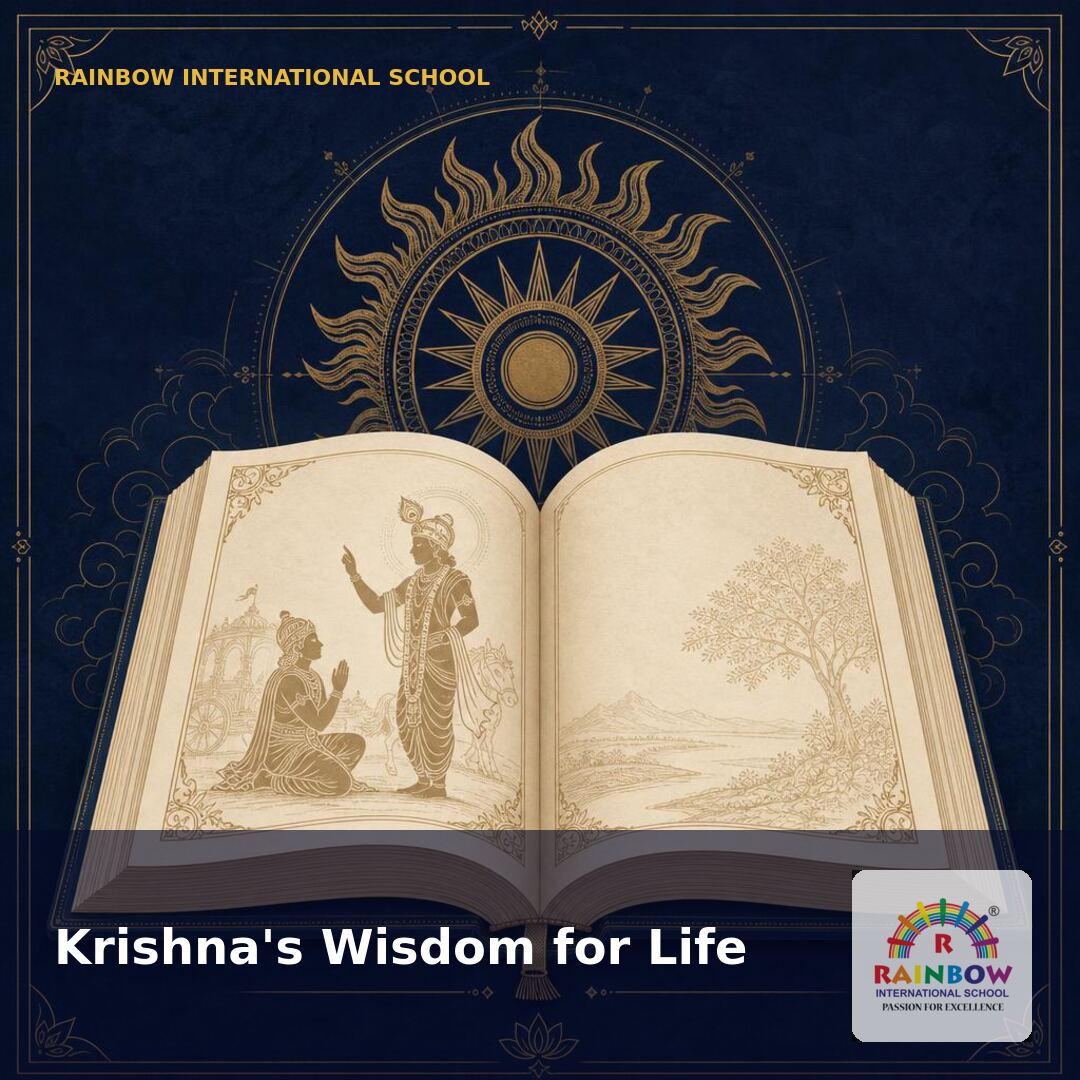
To protect the infant, Vasudeva carried baby Krishna across the flooded Yamuna river on a stormy night to the home of Nanda and Yashoda in Gokul, where Krishna spent his childhood as a much-loved, mischievous cowherd boy — famous for stealing butter, playing the flute, and performing extraordinary feats that protected his village from danger. As he grew, Krishna returned to Mathura to overthrow Kansa, later became a central guide and charioteer to Arjuna during the Mahabharata war, and delivered the timeless wisdom of the Bhagavad Gita — one of the most important philosophical texts in the world, still studied in schools, universities and boardrooms today for its lessons on duty, purpose and equanimity.
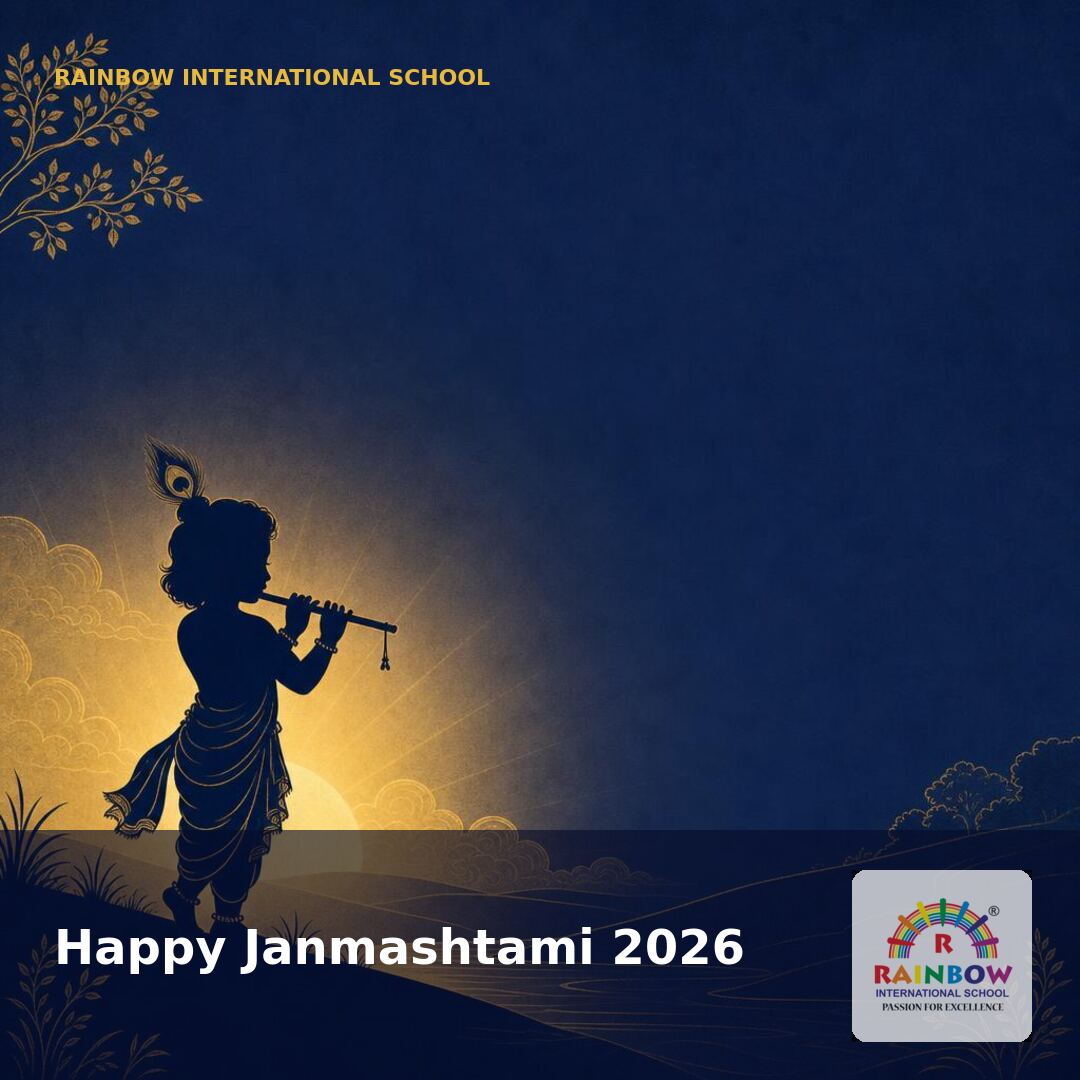
Krishna is celebrated in many forms: as Bal Gopal (the playful child), Makhan Chor (the butter thief), Govinda (protector of cows), and Yogeshwara (Lord of Yoga) — reflecting a personality that is at once divine, wise, and wonderfully human.
03 · From Mathura to Gokul
The story of Janmashtami begins generations before Krishna's birth. King Kansa of Mathura imprisoned his own sister Devaki and her husband Vasudeva after a prophecy warned that her eighth son would be his destroyer. One by one, Kansa killed six of their children. When Krishna, the eighth child, was born at the stroke of midnight, the prison guards fell into a mysterious sleep, the chains binding Vasudeva loosened, and the doors opened on their own.
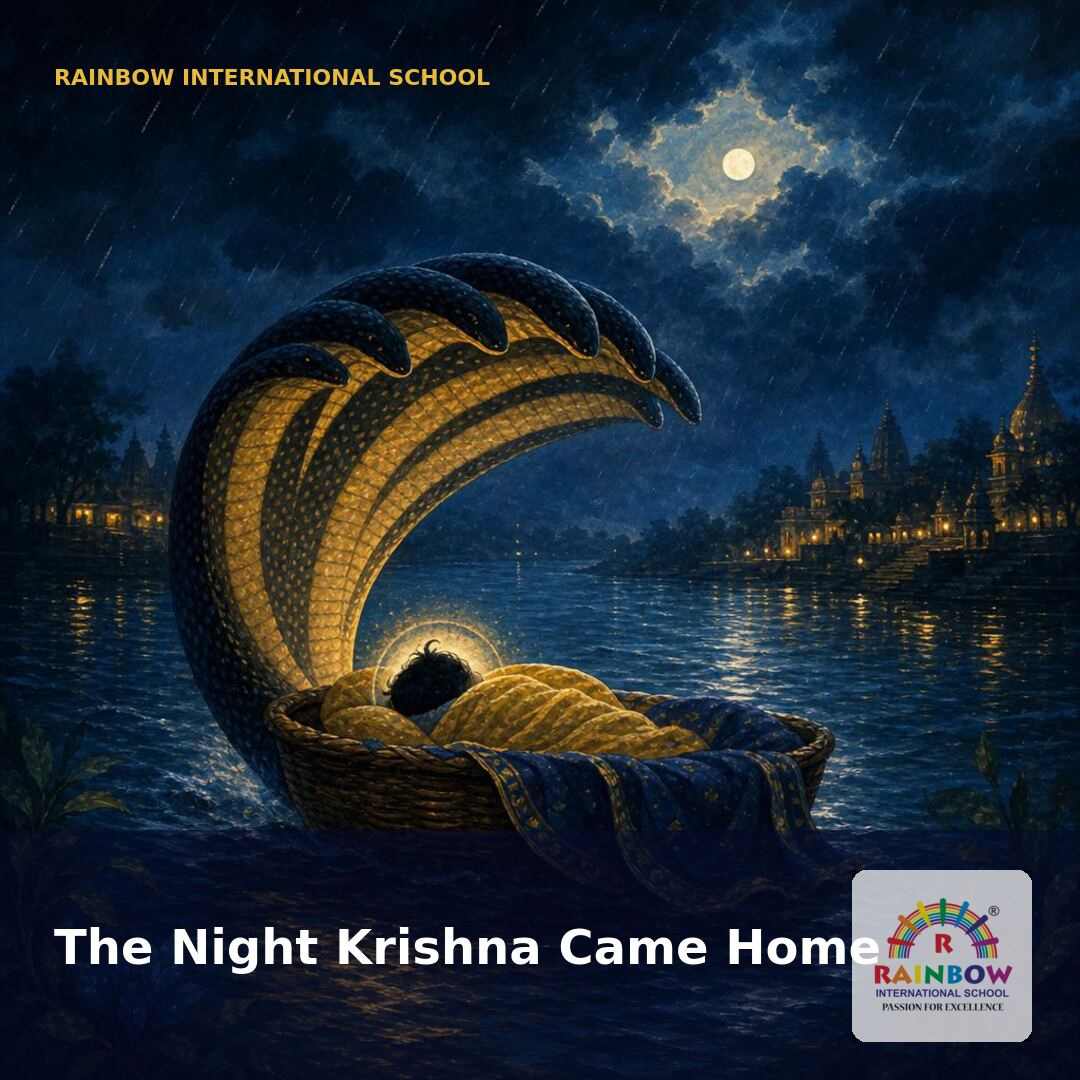
Under cover of a fierce thunderstorm, Vasudeva carried the newborn Krishna across the swollen Yamuna river in a basket, said to be protected overhead by the great serpent Shesha. He exchanged the baby with a newborn girl at the home of Nanda and Yashoda in Gokul, and returned to the prison before dawn. Krishna grew up safely in Gokul and later Vrindavan, away from Kansa's reach, until he was old enough to return to Mathura and fulfil the prophecy — freeing his parents and restoring just rule.
This narrative — found in the Bhagavata Purana, Vishnu Purana, Harivamsa and Mahabharata — has been retold for thousands of years across Indian oral tradition, classical dance, temple art, folk theatre (Raas Leela), and literature. Janmashtami itself is one of the oldest continuously celebrated Hindu festivals, observed with descriptions dating back over a millennium in classical texts, and today celebrated by an estimated one billion+ Hindus and Krishna devotees worldwide, including large ISKCON communities across the globe.
| Event | Significance |
|---|---|
| Birth in Mathura prison | Midnight birth during Rohini Nakshatra, Ashtami Tithi, Bhadrapada month |
| Journey to Gokul | Vasudeva crosses the Yamuna to protect infant Krishna |
| Childhood in Gokul & Vrindavan | Makhan Chor tales, Kaliya Daman, Govardhan Parvat episode |
| Return to Mathura | Krishna ends Kansa's tyrannical rule |
| Role in the Mahabharata | Krishna guides Arjuna as charioteer and philosophical guide |
| The Bhagavad Gita | Krishna's discourse to Arjuna on duty, purpose and dharma |
| Legacy | Worshipped as Bal Gopal, Govinda, Yogeshwara across India and the world |
04 · Values for every generation
At its heart, Janmashtami celebrates the eternal victory of good over evil, dharma over adharma, and light over darkness — Krishna's very birth is a symbol that even in the darkest circumstances (a prison cell, a kingdom under tyranny), positive change is possible.
For observant Hindu families, the day involves a vrat (fast), prayers, devotional singing (bhajans and kirtans) through the night, and a midnight celebration (Nishita Puja) marking the exact moment of Krishna's birth, followed by Charanamrit and Panchamrit (a sacred mixture of milk, curd, honey, ghee and sugar) offered to the deity and shared among devotees.
Beyond ritual, Janmashtami carries lessons that resonate strongly with a school's mission to nurture well-rounded individuals:
These themes make Janmashtami a meaningful addition to a school's cultural calendar — not only as a religious observance, but as a springboard for conversations about ethics, history, and Indian heritage.
05 · Nine visual ideas
Represents Krishna's ability to draw hearts through art and music; a symbol of surrender and harmony
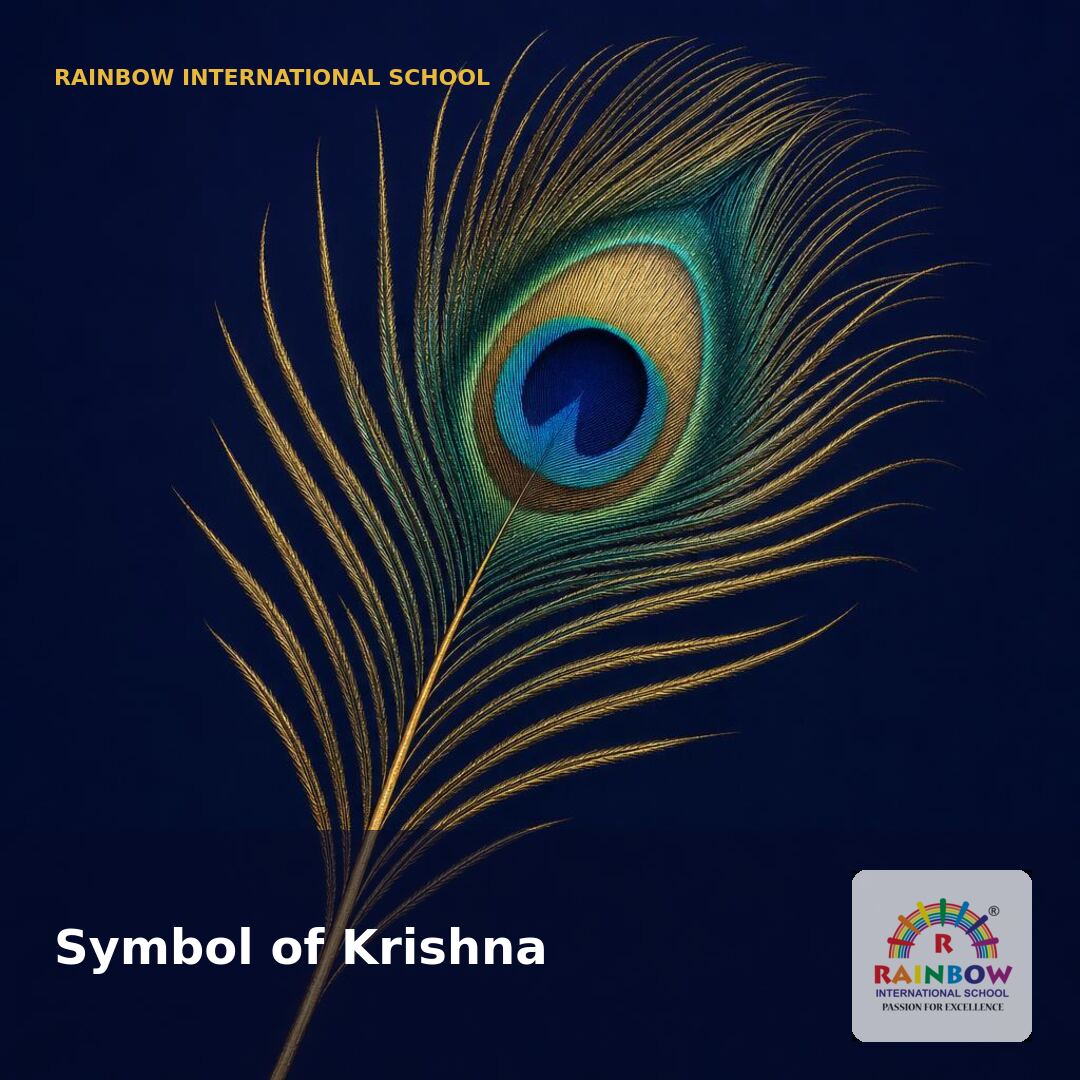
Worn in Krishna's crown; symbolises beauty, pride tempered with humility, and connection with nature
Represents purity, innocence, and the sweetness of devotion (bhakti)
A divine gem worn by Krishna, symbolising the purest form of consciousness
Krishna's discus weapon, representing the protection of dharma
Krishna's conch shell, whose sound signalled the start of righteous battle in the Mahabharata
Represent Krishna's role as protector (Govinda) of nature, animals and community
Krishna is traditionally depicted wearing yellow, a colour associated with knowledge and auspiciousness
Symbolic of the vastness of the sky and ocean — the infinite nature of the divine
06 · One story, many regional forms
Janmashtami is celebrated with distinct regional flavour across the country:
This diversity is part of what makes Janmashtami such a rich, unifying festival — one story, celebrated in dozens of beautiful regional forms.
07 · A Maharashtra tradition
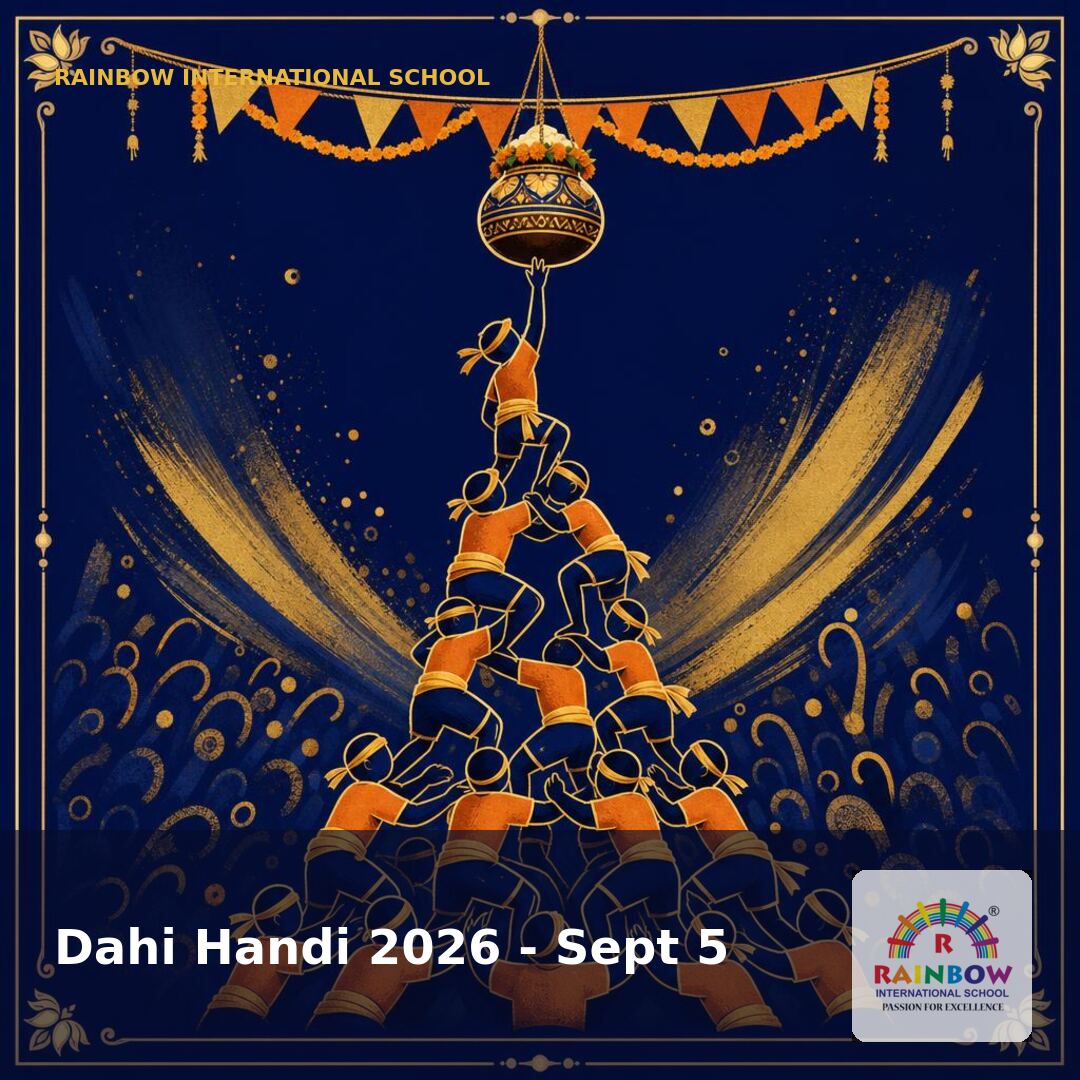
Dahi Handi, meaning "curd pot," is one of Janmashtami's most spectacular traditions, especially in Maharashtra. It re-enacts young Krishna's playful habit of stealing makhan (butter) and curd from earthen pots hung out of his reach by the women of Gokul, who would hang their pots high to keep them safe from the mischievous "Makhan Chor."
On Dahi Handi day, a clay pot filled with curd, milk, and other treats is suspended high above a street or ground. Teams of young men and women, known as "Govinda" troupes, form human pyramids — sometimes five or six tiers high — to reach and break the pot, all while a crowd cheers them on and drenches them with water for extra challenge. Mumbai and Thane are particularly famous for large-scale, competitive Dahi Handi events, some offering significant prize money to the winning troupe.
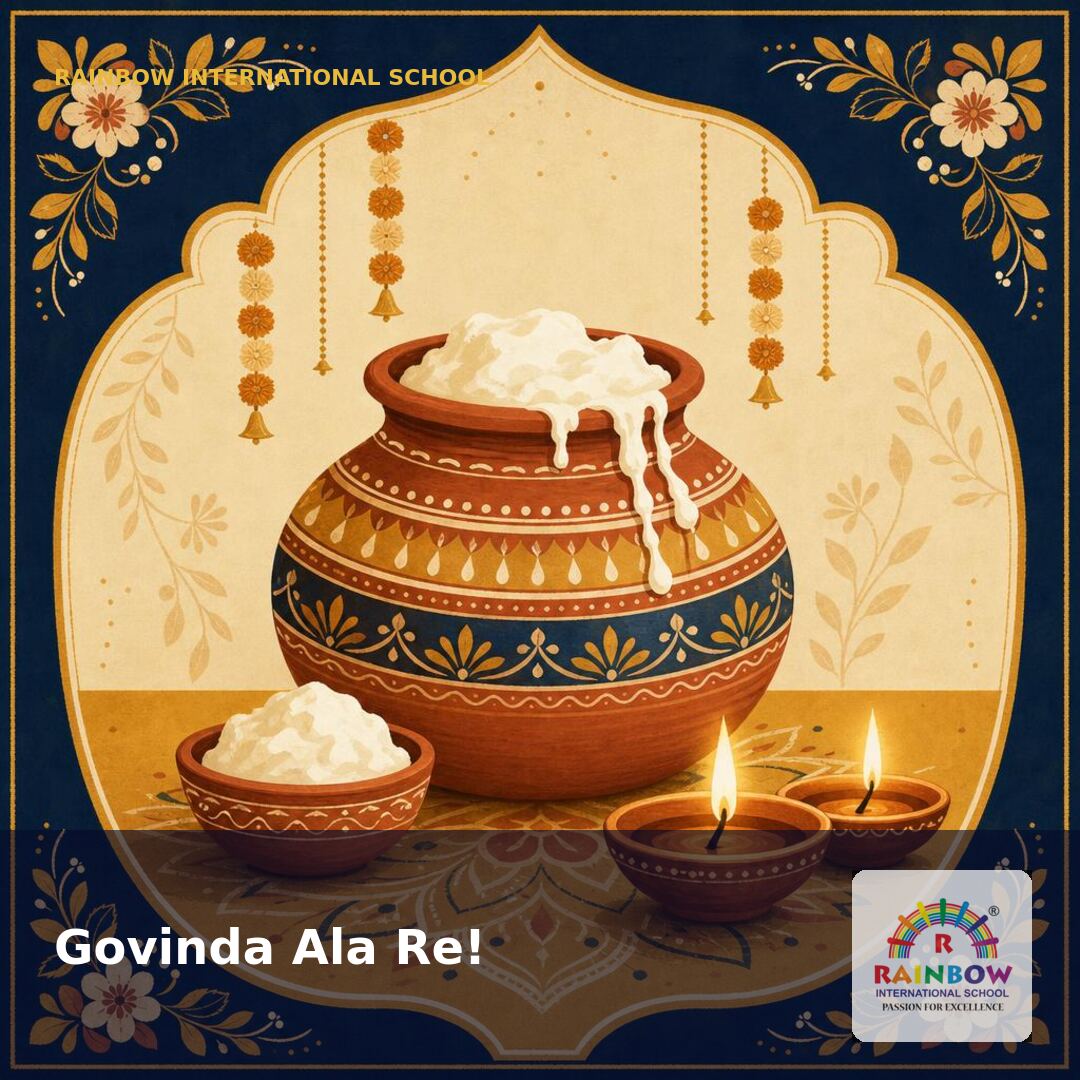
Gopalkala refers to the prasad (blessed food) traditionally prepared and shared once the pot is broken — a mixture of flattened rice (poha), curd, milk, butter, and fruits, believed to be one of Krishna's favourite foods. Sharing Gopalkala symbolises community, abundance, and the joy of togetherness.
In 2026, Dahi Handi celebrations fall on Saturday, September 5 — the day after the main Janmashtami puja in the Smarta tradition.
08 · Ready to use in class
Note for readers: Each essay below is written as a ready-to-use, standalone piece for classroom submissions, homework, or recitation. Use the "Copy Text" affordance noted for the live web version.
Janmashtami is a joyful Hindu festival that celebrates the birth of Lord Krishna, the eighth avatar of Lord Vishnu. He was born at midnight in Mathura to Devaki and Vasudeva but grew up in Gokul with his foster parents, Nanda and Yashoda. Krishna is remembered for his mischievous childhood, his love for butter, his soulful flute music, and his important teachings in the Bhagavad Gita. On Janmashtami, people fast through the day, sing devotional songs, decorate temples, and celebrate at midnight when Krishna is believed to have been born. In Maharashtra, the festival is also marked by the exciting Dahi Handi tradition.
Janmashtami, also known as Krishna Janmashtami or Gokulashtami, is one of the most widely celebrated festivals in Hindu tradition, marking the birth of Lord Krishna. According to the Bhagavata Purana, Krishna was born at midnight in a prison in Mathura to Devaki and Vasudeva, during the tyrannical rule of King Kansa. To protect the newborn from Kansa, who had been foretold that Devaki's eighth child would cause his downfall, Vasudeva carried baby Krishna across the flooded Yamuna river to Gokul, where he was raised by Nanda and Yashoda.
Krishna's childhood is filled with memorable stories — stealing butter from neighbours' homes (earning him the nickname "Makhan Chor"), subduing the venomous serpent Kaliya in the Yamuna, and lifting the Govardhan Hill on his finger to shelter villagers from a devastating storm. As an adult, Krishna played a central role in the Mahabharata as Arjuna's charioteer and guide, delivering the profound teachings of the Bhagavad Gita on duty, purpose, and righteous living.
Janmashtami is observed with great devotion across India. Devotees observe a day-long fast, sing bhajans and kirtans, and gather for a midnight puja (Nishita Puja) to mark the exact moment of Krishna's birth. Temples and homes are beautifully decorated, and idols of baby Krishna are placed in cradles and swings. In Maharashtra, the festival includes the thrilling Dahi Handi tradition, where teams form human pyramids to break pots of curd suspended high above the streets, recreating Krishna's playful butter-stealing exploits.
Beyond its religious significance, Janmashtami carries timeless lessons — the triumph of good over evil, the importance of courage and wisdom, and the joy of community celebration. It reminds us that even the most powerful teachings can be wrapped in stories of childhood playfulness and love.
Krishna Janmashtami stands among the most significant festivals in the Hindu calendar, commemorating the birth of Lord Krishna, revered as the eighth avatar of Lord Vishnu and one of the most complex, beloved figures in Indian philosophy and mythology. Celebrated on the Ashtami (eighth day) of the Krishna Paksha in the month of Bhadrapada, the festival typically falls in August or September, and in 2026 is observed on September 4 (Smarta tradition) and September 5 (Vaishnava/ISKCON tradition).
The narrative of Krishna's birth is set against a backdrop of tyranny and prophecy. King Kansa of Mathura, warned that his sister Devaki's eighth child would bring about his end, imprisoned Devaki and her husband Vasudeva and killed their first six children. When Krishna was born as the eighth child, at the stroke of midnight, divine intervention allowed Vasudeva to escape the heavily guarded prison and carry the infant across the storm-swollen Yamuna river to the home of Nanda and Yashoda in Gokul, where Krishna would spend a childhood defined by both mischief and miracles.
Growing up in Gokul and later Vrindavan, young Krishna became famous for his love of butter (earning the endearing title "Makhan Chor," or butter thief), his enchanting flute music that is said to have captivated all of nature, and several extraordinary feats — subduing the poisonous serpent Kaliya who had contaminated the Yamuna, and lifting the Govardhan Hill to protect villagers from Indra's wrath, teaching the community to have faith in their own strength and unity rather than fear.
As an adult, Krishna's role expanded from a beloved cowherd to a statesman, philosopher, and guide. His discourse to the warrior Arjuna on the battlefield of Kurukshetra — recorded as the Bhagavad Gita — remains one of the most studied philosophical texts in the world, offering guidance on duty (dharma), detachment from outcomes, self-discipline, and the nature of the self. This dual identity — the playful child of Gokul and the profound philosopher of Kurukshetra — is part of what makes Krishna such an enduringly relatable figure across generations.
Janmashtami celebrations reflect this duality. The day begins with fasting and prayer, builds towards devotional singing and storytelling through the evening, and culminates in a midnight puja (Nishita Puja) that marks the precise, joyous moment of Krishna's birth, followed by the sharing of Panchamrit and festive prasad. In Maharashtra, the following day brings the electric energy of Dahi Handi, where human pyramids of "Govindas" scale each other's shoulders to break pots of curd — a joyous, physical tribute to Krishna's own childhood exploits.
For students, Janmashtami is an opportunity to explore Indian history, mythology, regional diversity, and enduring philosophical ideas — all wrapped in a festival that is, at its heart, a celebration of courage, wisdom, community and joy.
कृष्ण जन्माष्टमी हिंदू धर्म के सबसे महत्वपूर्ण त्योहारों में से एक है, जो भगवान विष्णु के आठवें अवतार, भगवान श्रीकृष्ण के जन्म का उत्सव है। पौराणिक कथाओं के अनुसार, श्रीकृष्ण का जन्म मथुरा की जेल में आधी रात को देवकी और वासुदेव के आठवें पुत्र के रूप में हुआ था। अत्याचारी राजा कंस से बचाने के लिए वासुदेव जी उन्हें यमुना नदी पार कराकर गोकुल ले गए, जहाँ नंद और यशोदा ने उनका पालन-पोषण किया।
श्रीकृष्ण का बचपन माखन चुराने, बांसुरी बजाने और कालिया नाग को वश में करने जैसी अद्भुत घटनाओं से भरा है। बड़े होकर उन्होंने महाभारत में अर्जुन के सारथी और मार्गदर्शक के रूप में भगवद्गीता का उपदेश दिया, जो आज भी विश्वभर में पढ़ी जाती है।
जन्माष्टमी के दिन भक्त उपवास रखते हैं, भजन-कीर्तन गाते हैं और आधी रात को विशेष पूजा करते हैं। महाराष्ट्र में इस अवसर पर दही हांडी का रोमांचक आयोजन होता है, जहाँ मानव पिरामिड बनाकर ऊँचाई पर बंधी दही की हांडी फोड़ी जाती है। यह पर्व हमें सत्य की विजय, साहस और एकता का महत्वपूर्ण संदेश देता है।
श्रीकृष्ण जन्माष्टमी हा हिंदू धर्मातील एक अत्यंत महत्त्वाचा सण असून, भगवान विष्णूंचा आठवा अवतार असलेल्या श्रीकृष्णाच्या जन्माचा उत्सव आहे. पौराणिक कथेनुसार, श्रीकृष्णाचा जन्म मथुरेतील तुरुंगात मध्यरात्री देवकी आणि वासुदेव यांचा आठवा पुत्र म्हणून झाला. जुलमी राजा कंसापासून बालकाचे रक्षण करण्यासाठी वासुदेवांनी यमुना नदी पार करून त्यांना गोकुळात नेले, जिथे नंद आणि यशोदा यांनी त्यांचा सांभाळ केला.
श्रीकृष्णाचे बालपण लोणी चोरणे, बासरी वाजवणे आणि कालिया नागाला वठणीवर आणणे यांसारख्या अद्भुत प्रसंगांनी भरलेले आहे. मोठे झाल्यावर त्यांनी महाभारतात अर्जुनाचे सारथी व मार्गदर्शक बनून भगवद्गीतेचा उपदेश दिला, जो आजही जगभर वाचला जातो.
जन्माष्टमीच्या दिवशी भाविक उपवास करतात, भजन-कीर्तन गातात आणि मध्यरात्री विशेष पूजा करतात. महाराष्ट्रात या निमित्ताने दहीहंडीचा थरारक कार्यक्रम होतो, ज्यामध्ये मानवी मनोरे रचून उंचावर बांधलेली दहीहंडी फोडली जाते. हा सण आपल्याला सत्याचा विजय, धैर्य आणि एकतेचा संदेश देतो.
09 · For the school assembly
Respected Principal, teachers, and my dear friends, a very good morning to all of you.
Today we have gathered to celebrate Krishna Janmashtami — the joyous birthday of Lord Krishna, one of the most beloved figures in Indian tradition. Krishna was born in Mathura to Devaki and Vasudeva, but grew up in Gokul under the loving care of Nanda and Yashoda. He is remembered for his playful childhood, his beautiful flute music, and his profound teachings in the Bhagavad Gita, where he taught the importance of duty, courage, and doing what is right.
Janmashtami reminds us that goodness always triumphs over evil, and that wisdom can be found even in the simplest stories of childhood. Let us celebrate this day by remembering these timeless values. Thank you, and Jai Shri Krishna!
Respected Principal, honoured teachers, and my dear friends — a very warm good morning to everyone gathered here today.
We are here to celebrate one of the most cherished festivals in Indian tradition — Krishna Janmashtami, marking the birth of Lord Krishna, revered as the eighth avatar of Lord Vishnu. According to our scriptures, Krishna was born at midnight in a prison cell in Mathura, to Devaki and Vasudeva, at a time when the region suffered under the tyrannical rule of King Kansa. To protect the newborn, his father Vasudeva carried him across the stormy Yamuna river to Gokul, where he was raised by the loving foster parents, Nanda and Yashoda.
Krishna's childhood is filled with stories that continue to inspire us today — his playful love for butter, which earned him the name "Makhan Chor," his enchanting flute that could captivate all of nature, his courage in subduing the serpent Kaliya, and his strength and leadership in lifting the Govardhan Hill to protect his village from a devastating storm. As he grew older, Krishna became a central guiding figure in the Mahabharata, serving as Arjuna's charioteer and delivering the timeless wisdom of the Bhagavad Gita — teachings on duty, self-discipline, and doing right without fear of the outcome, which are studied and admired across the world even today.
Janmashtami is celebrated with great devotion across India — through fasting, devotional singing, midnight prayers, and beautifully decorated temples and homes. In Maharashtra, we also celebrate the exciting tradition of Dahi Handi, where teams form human pyramids to break a pot of curd, recreating young Krishna's own mischievous adventures.
As students, we can learn so much from Krishna's life — the courage to stand up against injustice, the wisdom to make thoughtful decisions, and the importance of balancing responsibility with joy and playfulness. On this Janmashtami, let us carry forward these values in our own lives — at school, at home, and in everything we do.
Thank you, and Jai Shri Krishna!
आदरणीय प्राचार्य महोदय, सम्मानित शिक्षकगण एवं मेरे प्रिय साथियों, आप सभी को सुप्रभात।
आज हम श्रीकृष्ण जन्माष्टमी का पावन पर्व मनाने के लिए एकत्रित हुए हैं। भगवान श्रीकृष्ण का जन्म मथुरा में देवकी और वासुदेव के घर हुआ था, परंतु उनका पालन-पोषण गोकुल में नंद और यशोदा ने किया। वे अपने बचपन की शरारतों, मधुर बांसुरी और भगवद्गीता के महान उपदेशों के लिए जाने जाते हैं, जिनमें उन्होंने कर्तव्य, साहस और सत्य के मार्ग पर चलने की शिक्षा दी।
जन्माष्टमी हमें यह संदेश देती है कि सत्य की सदैव विजय होती है, और बचपन की सरल कहानियों में भी गहरी बुद्धिमत्ता छिपी होती है। आइए हम सब इन मूल्यों को अपने जीवन में अपनाएँ।
धन्यवाद। जय श्री कृष्ण!
आदरणीय मुख्याध्यापक महोदय, सन्माननीय शिक्षकवर्ग आणि माझ्या प्रिय मित्रांनो, आपणा सर्वांना सुप्रभात.
आज आपण श्रीकृष्ण जन्माष्टमी हा पवित्र सण साजरा करण्यासाठी एकत्र आलो आहोत. भगवान श्रीकृष्णाचा जन्म मथुरेत देवकी आणि वासुदेव यांच्या पोटी झाला, परंतु त्यांचे संगोपन गोकुळात नंद आणि यशोदा यांनी केले. ते आपल्या बालपणीच्या खोड्या, मधुर बासरी आणि भगवद्गीतेतील महान उपदेशांसाठी ओळखले जातात, ज्यामध्ये त्यांनी कर्तव्य, धैर्य आणि सत्याच्या मार्गावर चालण्याची शिकवण दिली.
जन्माष्टमी आपल्याला हा संदेश देते की सत्याचा नेहमी विजय होतो, आणि बालपणीच्या साध्या गोष्टींमध्येही खोल शहाणपण दडलेले असते. चला, आपण सर्वजण हे मूल्य आपल्या जीवनात रुजवूया.
धन्यवाद. जय श्री कृष्ण!
10 · Words to carry forward
उद्धरण (भगवद्गीता से):
1. "कर्म करो, फल की चिंता मत करो।"
2. "जो हुआ अच्छा हुआ, जो हो रहा है वह भी अच्छा हो रहा है।"
3. "आत्मा न कभी जन्म लेती है, न कभी मरती है।"
4. "मनुष्य अपने विश्वास से बनता है, जैसा वह विश्वास करता है वैसा ही बन जाता है।"
नारे:
1. हरे कृष्ण! हरे कृष्ण! कृष्ण कृष्ण, हरे हरे!
2. गोविंदा आला रे आला!
3. नंद के आनंद भयो, जय कन्हैया लाल की!
4. राधे राधे! गोविंद बोलो, हरि गोपाल बोलो!
5. जय श्री कृष्ण! जय कन्हैया!
6. माखन चोर, मटकी फोड़!
उद्धरणे (भगवद्गीतेतून):
1. "कर्म करत राहा, फळाची अपेक्षा करू नका."
2. "जे झाले ते चांगल्यासाठीच झाले, जे घडत आहे तेही चांगल्यासाठीच घडत आहे."
3. "आत्मा कधीच जन्माला येत नाही आणि कधीच मरत नाही."
घोषणा:
1. हरे कृष्ण! हरे कृष्ण! कृष्ण कृष्ण, हरे हरे!
2. गोविंदा आला रे आला!
3. नंदाचा आनंद, जय कन्हैयालालाची जय!
4. राधे राधे! गोविंद बोला, हरी गोपाल बोला!
5. जय श्री कृष्ण! जय कान्हा!
6. माखनचोर, मटकी फोड!
11 · Nursery–Class 2
A gentle introduction to four favourite Krishna stories, written simply for our youngest learners.
On a stormy night, baby Krishna's father, Vasudeva, had to keep him safe from an angry king. He placed baby Krishna in a basket and carried him on his head, walking through a rushing river in the pouring rain. As the water rose higher and higher, a great serpent named Shesha appeared and spread his hood over the baby like an umbrella, keeping him safe and dry. Vasudeva safely crossed the river and left Krishna with a kind couple named Nanda and Yashoda, who loved him as their own.
As a little boy in Gokul, Krishna loved butter more than anything! The mothers of the village would hang their pots of butter high on the ceiling so naughty little Krishna couldn't reach them. But clever Krishna would build towers with his friends, climbing on each other's shoulders, to reach the pots anyway! Everyone in the village loved him too much to ever be truly angry — his smile made even the strictest grown-ups laugh.
A fearsome snake named Kaliya lived in the Yamuna river and had made the water poisonous, so no one could drink it or fish safely. One day, young Krishna jumped into the river and danced on Kaliya's many hoods until the snake agreed to leave and never harm the villagers again.
When the villagers of Gokul were about to face a terrible storm, young Krishna lifted the entire Govardhan Hill on just one finger, holding it up like a giant umbrella so everyone — people, children, and animals — could stay safe and dry underneath.
12 · Tap a card to reveal
13 · Test your knowledge
15 main questions + 5 bonus questions. Answer a question to see instant feedback, then try the bonus round.
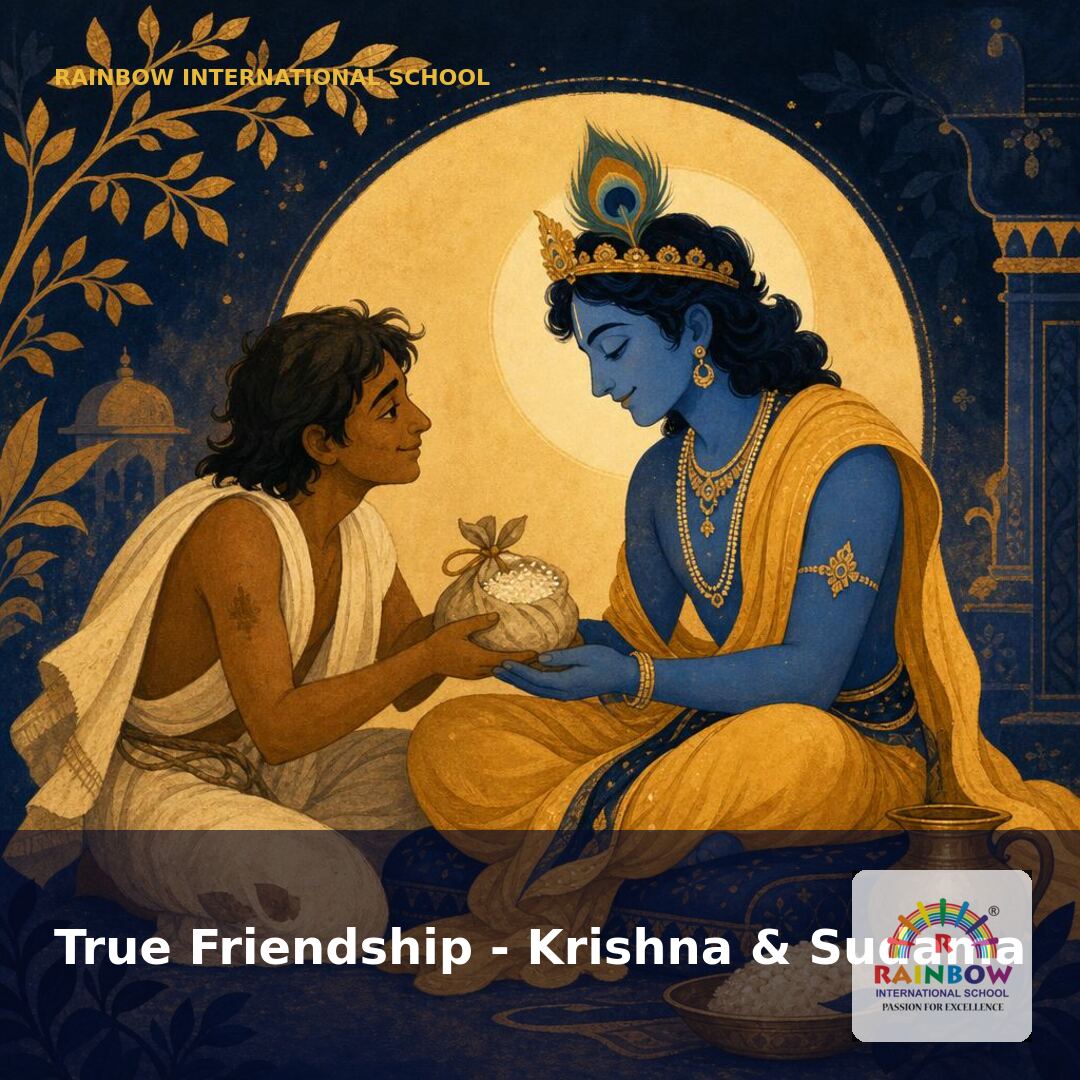
1. Mathura · 2. Devaki and Vasudeva · 3. Nanda and Yashoda · 4. Kansa · 5. Makhan Chor · 6. Yamuna · 7. The flute (Bansuri) · 8. Kaliya · 9. Govardhan Hill · 10. Bhagavad Gita · 11. Kurukshetra · 12. Dahi Handi · 13. Gopalkala · 14. Bhadrapada · 15. The eighth (8th) avatar · Bonus: 16. Sudama · 17. Rohini · 18. Panchamrit · 19. Panchajanya · 20. Sudarshan Chakra
14 · Learn by making
Students decorate small earthen pots with paint, mirrors, and fabric — a hands-on, low-cost craft activity for all grades.
Younger students dress up as baby Krishna (with peacock feather crowns and flutes) or Radha, with a small ramp-walk or class parade.
Grade-wise competitions (3–5, 6–8, 9–12) using the essays and speeches in Section 8–9, with trilingual (English/Hindi/Marathi) categories.
Classes present short dramatisations of favourite stories — the Kaliya Daman, the Govardhan Hill episode, or the Dahi Handi legend.
For senior grades, a recitation competition featuring well-known verses with simple explanations, connecting ancient philosophy to modern life lessons.
A safe, low-height, adult-supervised version of the Dahi Handi game for older students, focused on teamwork rather than height.
Krishna-themed poster and rangoli competitions using peacock, flute, and Govardhan Hill motifs.
School choir or dance troupe performances of popular Krishna bhajans and Raas-inspired choreography.
A simple, supervised class activity where students help prepare and share a version of Gopalkala (poha, curd, fruit) — a lovely way to connect food, culture and community.
15 · Food and togetherness
Food plays a central role in Janmashtami celebrations. A few traditional favourites families often prepare together:
A sacred five-ingredient mixture of milk, curd, honey, ghee, and sugar, offered to Krishna's idol during puja and shared as prasad.
Fresh homemade butter mixed with rock sugar (mishri) — Krishna's favourite treat, and a lovely simple recipe to make with young children.
A traditional offering of 56 different dishes, symbolising abundance — most families prepare a smaller, symbolic version with a handful of sweets and snacks.
A tangy, light mixture of flattened rice, curd, sev, and fruit, especially popular in Maharashtra after Dahi Handi celebrations.
Warm, comforting sweets often prepared for the evening celebration and shared with neighbours.
16 · A family guide
Many families observe a vrat (fast) on Janmashtami as a mark of devotion, typically breaking it after the midnight puja or the following morning. If your family observes this tradition, here are a few gentle, general pointers (always consult your family's own customs and, where relevant, a doctor for children, elderly members, or anyone with health conditions):
17 · Ready to share
Ready-to-share captions for school social media pages and parent WhatsApp groups.
"Wishing you a Janmashtami filled with the joy of Bal Gopal and the wisdom of the Gita. Happy Krishna Janmashtami!"
"May Lord Krishna's flute bring melody to your life this Janmashtami. Jai Shri Krishna!"
"Celebrating the birth of the one who taught us that good always triumphs over evil. Happy Janmashtami!"
"जन्माष्टमी की हार्दिक शुभकामनाएं! भगवान श्रीकृष्ण का आशीर्वाद आप सभी पर बना रहे।"
"राधे राधे! इस जन्माष्टमी पर कान्हा आपके जीवन में खुशियों की बांसुरी बजाएं।"
"जन्माष्टमीच्या हार्दिक शुभेच्छा! श्रीकृष्णाचा आशीर्वाद तुम्हा सर्वांवर सदैव राहो."
"गोविंदा आला रे आला! या जन्माष्टमीला बालकृष्णाचे आशीर्वाद तुम्हाला मिळो."
18 · Original social graphics
Ten original square illustrations for WhatsApp, Instagram and Facebook. Each image is 1080×1080px, carries a small RIS watermark, and is available as a direct download.


19 · Clear answers
20 · Continue exploring
CBSE-affiliated, Jr KG to Class 12 | Brahmand, Thane West
3.5-acre campus, swimming pool, amphitheatre, sports facilities, organic farming area, smart boards, science labs.
Playgroup to Kindergarten (ages 1.5–5.5) | Thane, Maharashtra
A safe, joyful, nurturing early-learning environment where little ones feel cared for, curious, and excited to learn.
"Give Your Child the Gift of Excellence" — from ancient stories of courage and wisdom to modern classrooms built for the future, Rainbow International School helps every child discover their potential.
Rainbow International School · Thane
Keep exploring the stories, questions and activities that help students connect Indian heritage with the world they are building today.